Spotlight Writer’s 2026
Spotlight Writer’s 2026 is a new programme with the Martello. These three writer’s have been selected to work with us on their pieces for each of our upcoming editions this year!
SPOTLIGHT WRITER’S 2026
-
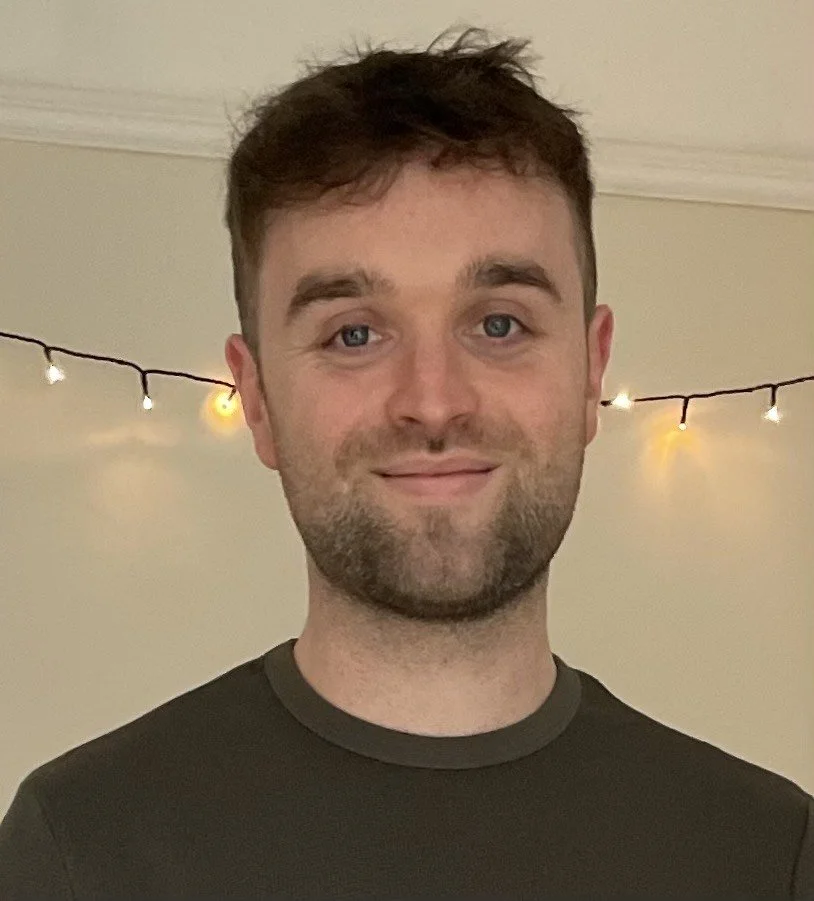
Keelan Gallagher is a short story writer, screenwriter and film essayist from Letterkenny, Co. Donegal and resident in Rush, Co. Dublin. His short fiction has featured in Ragaire Magazine, Sparks Literary Journal, SWERVE Magazine, The Martello Journal and ROPES Journal. His feature script ‘An Solas’ is currently in development with N.I. Screen and TG4. He is a regular contributor to filmindublin.ie where he has just concluded an article series entitled ‘75/‘25 comparing the films of those years.
-
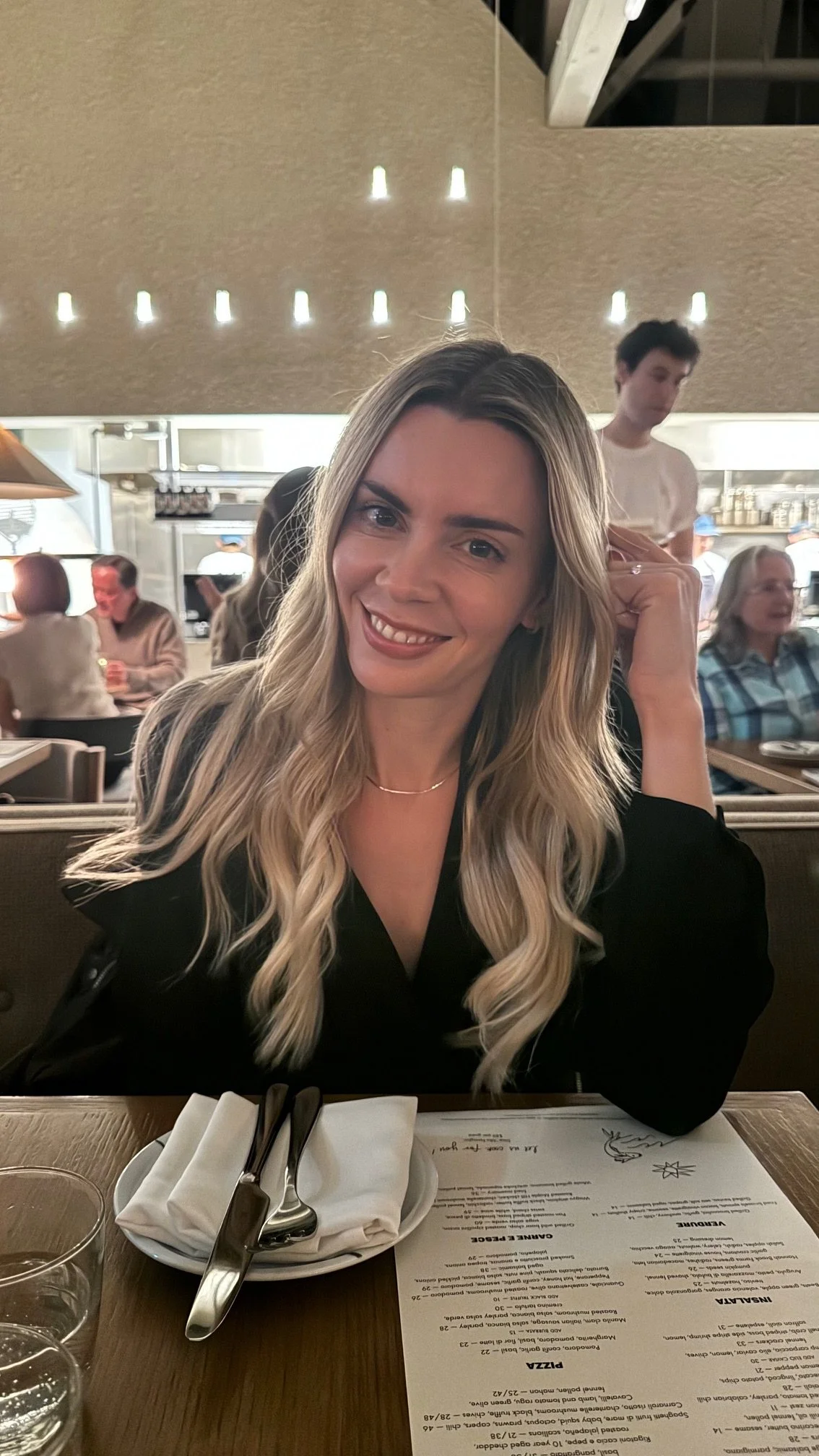
Sarah is a writer from Cork, now living in Vancouver, Canada with her husband, four children, and her dog. Her work has appeared in The Closed Eye Open (Mayas Micros, Issue 36) and 50-Word Stories, with forthcoming work in Bending Genres.
-
DS Maolalai has been described by one editor as "a cosmopolitan poet" and another as "prolific, bordering on incontinent". His work has been nominated fourteen times for BOTN, eleven for the Pushcart and once for the Forward Prize, and released in three collections; "Love is Breaking Plates in the Garden" (Encircle Press, 2016), "Sad Havoc Among the Birds" (Turas Press, 2019) and “Noble Rot” (Turas Press, 2022)
WRITER’S SHORTLISTED 2026

-
Jennifer McMahon, co-Editor-In-Chief of Frazzled Lit, won the 2024 AIS Creative Writing Award (public category), the Irish Writers Centre Novel Fair in 2023, has been shortlisted for Short Story of the Year at the Irish Book Awards (2023), the Bridport Short Story Prize and many other notable awards. She was also a second-place winner of the Oxford Prize (winter 2023), and was twice longlisted for the Bath Short Story Award. Her work appears in Crannog (2023 and 2025), HOWL, The Irish Independent (New Irish Writing), The Galway Review, Fractured Lit, Heimat Review, and many other places. She is represented by Storyline Literary Agency.
-
The Greatest Short Story Ever Written
The greatest short story ever written was conceived of, crafted by, squeezed from the fertile
imagination of, one Private Simon Peter Durant, US Army Rangers, 2nd Battalion, in
Germany, in late December 1945. He wrote it with a blunt pencil, in the tiniest of writing, on
the cardboard of a torn-open pack of cigarettes, before bedding down for the night with his
platoon in the ruins of a church.
The next morning, in a brief skirmish with a crack Waffen SS unit, Private Durant was
shot and killed by a stray enemy bullet. It was fired from the barrel of an MP40 machine-
pistol, and struck him in the heart, passing through the breast pocket of his tunic, wherein he
had placed the story. His blood soaked into the cardboard on which it was written, all but
obliterating the text. Sadly, all that remains to posterity is the closing paragraph, which reads:
‘As the bullet cut through flesh and bone, as it shattered Dawson’s sternum
and shredded his aorta, his final thought, in the very brief moment before he
expired, was not of his fiancé back home in Maryland who’d prayed for his
safe return by Christmas. He thought only of the greatest short story ever
written, and how no one would ever get to read it.’
Many years later, the blood-stained slip of cardboard was sold at auction in Baltimore for one
hundred thousand dollars, to a moderately wealthy stockbroker named John P. Reynolds.
Stopping at a liquor store on his way home to buy a celebratory bottle of champagne, John
was shot in the chest by a stray bullet, a hapless bystander in a robbery of the store.
John’s final thoughts, in the very brief moment before he expired, were not of his
mother, nor of his wife and two small children. He thought only of the greatest short story
ever written, and how he would never get the opportunity to decipher its true meaning.
The young white man arrested and charged at the scene by officers of the Baltimore
City Police Department, had this to say: ‘Bullets don’t discriminate. Sometimes you find
them, and sometimes they find you. All that really matters, when the smoke clears away, is
that your story is over and no one’s ever going to hear it.’
It might have given John Reynolds some small comfort had he known that these were
precisely the words Private Simon Peter Durant had used in the opening lines of the greatest
short story ever written.
-
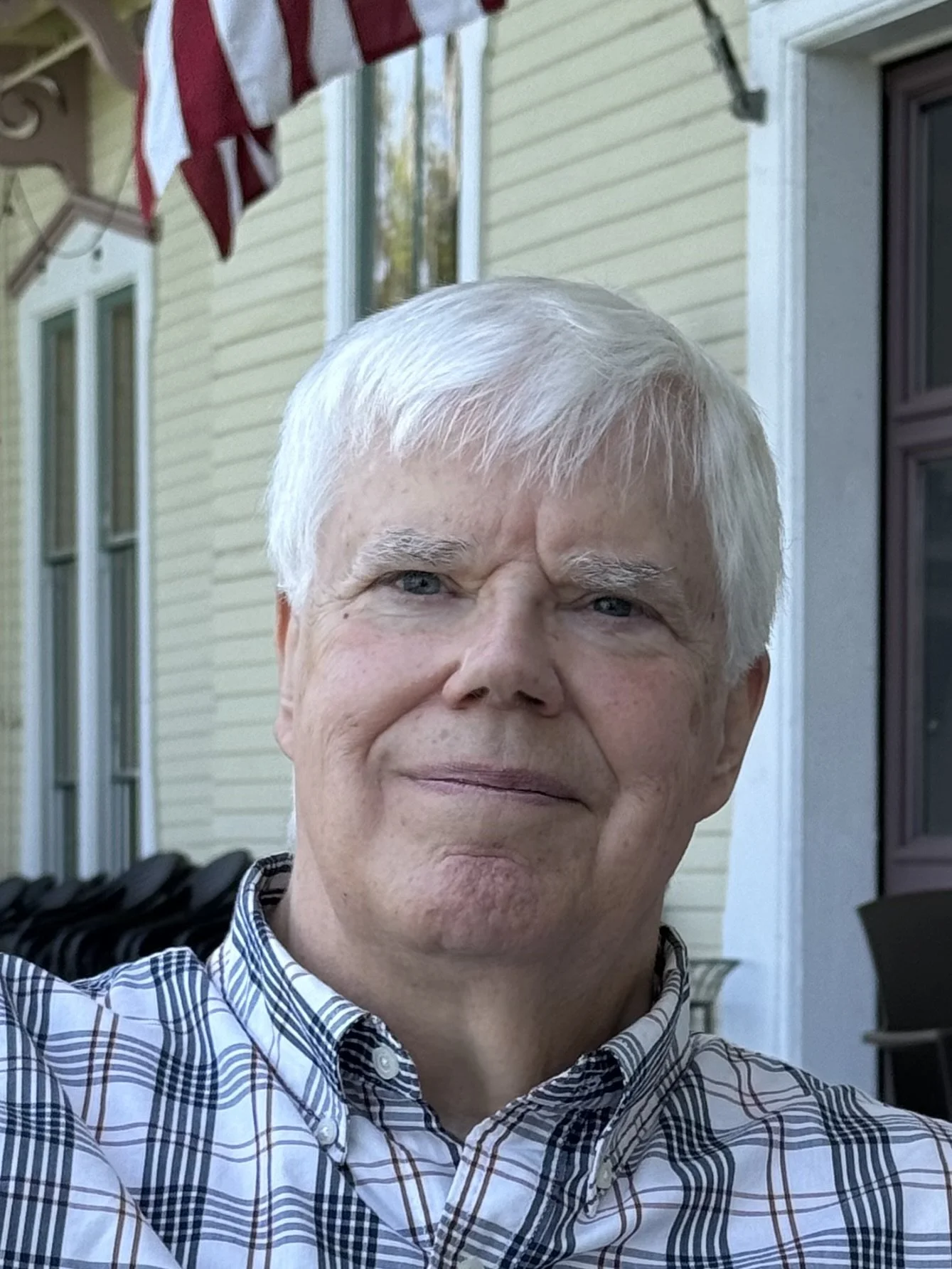
Richard Holinger’s essays, poetry, and fictions appear in Chautauqua, SIR, Cleaver, Whitefish Review, Cutleaf, and elsewhere. Nominations include the Pushcart Prize, Best Small Fictions, and Best Microfiction 2025, included in the latter. Books include North of Crivitz (poetry) and Kangaroo Rabbits and Galvanized Fences (essays). His 2025 poetry chapbook, Down from the Sycamores, is available from Finishing Line Press. A collection of short fiction, Unimaginable Things, is due out in early 2026, from Main Street Rag Publications. He holds a doctorate in creative writing from UIC, taught high school English for decades, and lives in rural northern Illinois.
-
It has been snowing for three days. Gill and Skip can no longer see the Mercedes that Gill parked in the driveway three days ago. It is not a hard snow, but the kind that loses cars.
“The Toro,” Skip says. “Maybe we should use it.”
“We’ll have another shot first,” says Gill.
“All right,” Skip says.
“I’ll make you a bet,” says Gill. “I’ll bet if you put a loaded .38 caliber pistol inside your mouth and pointed it at your brain and pulled the trigger you won’t be able to pull the trigger more than once.”
“What do you want to bet?”
“My father’s Rolls.” Gill hands the bottle of Pappy Van Winkle 10 Summers Old bourbon to Skip where they sit in leather recliners in front of the Louis XIV St. Brèche Violette marble fireplace.
Skip pours a shot and a half and belts it down, the burn, he considers, perhaps similar to what a four-foot Canadian muskellunge feels with a treble hook caught deep in its throat. “You need not be so generous.”
“He wouldn’t miss it,” says Gill. “Let’s sit in the sauna.”
In a corner of the cedar room, steam hisses up out of the rocks.
“I feel a great weight,” says Gill.
“The snow has been falling for three days.”
“It’s not only the snow. Part of it is Gail.”
“You broke it off with Gail.”
“Because I love her.”
“Men do what they do because they love women,” says Skip.
“That is how men are different from women.”
“Let’s swim in the pool.”
“Let’s wait until we can’t stand the heat any longer, then we’ll stay five more minutes.
Something may happen to us that our parents can’t give us and can’t be bought.”
Neither speaks for some time.
“Let’s swim in the pool,” Skip finally says. “Or turn down the thermostat.”
“It feels good to suffer.”
“Swimming is better than suffering.”
“The way for a man to change in an extraordinary way is to push himself,” says Gill.
“You are reading Hegel. Hegel is not God.”
“No one is God,” says Gill.
They wait for something that will change them forever.
“I may have been wrong,” says Gill. “Not about everything, but about the sauna.”
“Let’s swim.”
“Then we’ll go snowmobiling.”
“And drink my father’s champagne,” says Skip.
“Snowmobiling through deep woods will teach us something.”
“The snow and the trees will change us.”
“And spring is coming. Spring might change us.”
Gill dives off the ten-meter board. When he comes out of his twist, he thinks of Gail and hits the surface sideways. When Gill surfaces, he laughs, so Skip understands Gill is all right.
Skip looks through the glass walls where the snow continues to fall. In here, the wind chill cannot touch him.
Later, they will go snowmobiling, but only if they feel like it.
-
The poet, Junaid Ahmed Ahangar works as a doctor in a tertiary care institute in Srinagar, Kashmir. He graduated from Dhaka, Bangladesh and completed his MD from Srinagar, Kashmir. He also has an MA in English Literature and MA in Philosophy. He devotes his time between his profession and passions which over the last few years has seen a conscious departure towards writing poetry and prose. He is also a singer-songwriter and occasional guitarist with other interests apart from literary pursuits like music, film-making, podcasting and theology.
-
MAZEL TOV
in your lap, on the train
i read an ancient book
and the world is reduced to just its passing
i step out
i step into you
before i step into the world
through you, a world unto me, only much bigger
why do stations bid farewell?
what an awful world
where i cannot meet you right now
and not say goodbye
guarded a silent face for far too long
stayed away for far too long
where's the wind when i need it
to blame for the dying flame
when i said leave
what i really meant was stay
i am always falling on both my knees
i am always failing on both my knees
i guess what i am saying is need
i guess what i am saying is reeling
i guess what i am saying is an embrace
i guess what i am saying is kneeling
still
april holds the promise of a summer
to which i say mazel tov
and to the departing winter
i say mazel tov
-
Peter Mladinic's most recent book, The Whitestone Bridge, is available from Anxiety Press. An animal rights advocate, he lives in Hobbs, New Mexico, United States.
-
The Silent Treatment
On the tenth anniversary of your birthday
in heaven,
I’m back in that art class we had
with Martha Hobbster
of the teased black hair and Raiden Neilson
of the teased blond hair.
Your eyes, blacker than your black hair
that cascades in wavelets
past your shoulders, look my way.
Standing together
in a dark corner in the hall, outside
our classroom, with students passing by,
“Why aren’t you talking to me?” you ask.
I’m not talking to you because you’re
the beautiful girl, willow-lean,
in the dark corner, tall in your voice.
Walk with me in heaven.
On this tenth anniversary of your birthday
in heaven,
walk with me out the doors of this school,
down the sidewalk along River Road.
On Madison and River, my hand in yours,
I am yours.
In loving you I’m not alone.
-
Seán Dunne is a writer and photographer from Waterford City. His work has been published in SWERVE Magazine, The Martello Journal and The Waxed Lemon. He is now an English teacher based in Cork City.
-
Once Bitten, Twice Shy
On several occasions in my life I have been bitten. From teething children to dogs on the street, they’ve all made their mark. When I was younger I used to bite the flesh of my hand, leaving toothily indentations in the skin. I thought they resembled the pock marks of a plague victim, or the duelling scars of a nineteenth century aristocrat. Whist I never managed to pierce myself sufficiently, I had designs on scarring, keeping horse hair in reach so I could fill the wound with it.
See, bite marks are endearing. They reveal character and dignity. I recall, in the early years of my adolescence, first seeing a man with missing flesh.
“Sorry, sir, is that a bite wound?” I enquired.
The gentleman, no stranger to stolen valour, sighed profusely.
“I’m afraid not, more of a workplace incident.” He said.
“Too bad.” I replied, walking on.
I could sympathise with his plight. How often he must have been falsely stopped by strangers, only to reveal that he was no bite victim at all. A little slip of the soldering iron, an ill-fitted welding mask, these things rouse no pity in me. But to be chewed. That’s heroism. That’s identity. That’s the human condition.
Many of my best years were spent searching for bite victims.
“Is that you?” I’d say.
And “no” was the answer.
“Are you the one?” I’d call to them.
I would be scorned.
It was then that I met my wife. Walking in long protruding steps I noticed a large chunk missing from her nose. The cavity was the shape of France and had a continental feel. In my haste I crossed the street and grabbed hold of her hand.
“Have you been bitten?” I cried, desperately.
“I have.” She said, turning red.
I fell to my knees. I kept hold of her hands and began kissing them softly between smiling uncontrollable glances.
“You must go to dinner with me, you must!” I stammered on, loudly. People were staring.
“Dinner?” She said, matter of factly.
“Yes, please, it’s on me.” I said.
She stared at me from her towering position above, like a clothed lighthouse. I could see amusement and intrigue, directed at the scuppered boat before her.
“Fine.” She replied. “Just get off the ground.”
It was then that it all began. I had my own bite victim all to myself. I would buy her flowers and stare intently at France. At times I would get jealous and desire to be bitten myself. My malady was such that I began trespassing on others property, in the hopes of being mauled by a strange dog. But it all came to nought. Being bitten is not something you can want. It is a gift bestowed.
Coming to terms with these facts has been no simple matter. I am always at odds with my own flesh, particularly those parts that I would prefer were bitten off. The imagination has proved my most effective tool for reconciling with imprisonment. It is here that I reveal my true identity. Through mirrors and glass reflections I am met with the me of my desires. The beautiful version with bites.
My wife tells me she sees this picture too. She does not fully understand my impulse to be crunched and chomped, but she sees my vision of myself.
Visions are above understanding. Our clearest dreams lie beyond our comprehension. This is why they are so lucid and accessible to us. We do not turn our back on them. They are the purest expression of ourselves.
In my dreams, I remain in the garden. However my appearance in the waking world, I am the snake in slumber. With large fangs I laugh equally with God. We say to ourselves, “once bitten, twice shy.”